Mushrooms and Liver Health: Risks and Safe Use
Advice to take mushrooms to detox your liver skips the most important question: which mushroom, in what form? A serving of oyster mushrooms, a concentrated reishi extract, a psilocybin product, and an unidentified wild mushroom aren't interchangeable exposures. Calling all of them liver-friendly, or all of them dangerous, can lead to poor decisions.
A useful approach to mushrooms and liver health starts with identification, separates tolerability from treatment, and recognizes when there's no safe waiting period. Foods belong on the plate. Supplements need product-specific scrutiny. Suspected poisonous-mushroom ingestion belongs with emergency clinicians, not a home detox plan.
Table of Contents
- Four Mushroom Types and What to Do
- How Amatoxin Poisoning Injures the Liver
- What Liver Protection Claims Really Show
- Poisoning Numbers Behind the Headlines
- Reishi and Lion's Mane Side by Side
- Drugs Alcohol and Misleading Liver Tests
- Decide Whether to Continue or Stop
Four Mushroom Types and What to Do
Mushroom type, liver evidence, and first action
| Category | Usual examples | Human liver picture | First action |
|---|---|---|---|
| Culinary food | Button, oyster, shiitake, other edible Pleurotus or Lentinus | Short studies show little hepatotoxicity; animal enzyme changes aren't human treatment | Eat as food, not as liver therapy |
| Reishi extract | Ganoderma lucidum powders and extracts | Small, short trials usually show no enzyme change; rare acute hepatitis and liver failure are reported | Stop and get assessed if jaundice, dark urine, or fatigue appears |
| Lion's mane | Hericium erinaceus | Small trials kept liver tests in range; no major supplement-injury case-series signal | Don't treat disease with it; stop if new symptoms or abnormal tests appear |
| Psilocybin mushroom | Microdose or facilitated session | No clear direct liver injury under controlled conditions; alcohol and other drugs add uncertainty | Don't mix with alcohol or potentially liver-toxic medicines without clinical advice |
| Amatoxin wild mushroom | Amanita phalloides and similar species | Enzymes can exceed 5,000 U/L, followed by acute liver failure, transplantation, or death | Emergency care now; don't wait for jaundice |
| Other toxic wild fungi | Lepiota and unidentified foraged mushrooms | Reported Lepiota ALT values span 44 to 9,140 IU/L, with transplants and deaths | Same emergency rule; never use home detox |
These are four exposure groups, even though medicinal products deserve separate rows. A review of mushroom-related safety distinguishes generally reassuring short-term findings for edible fungi and some supplements from rare reishi-associated injury and the potentially catastrophic effects of amatoxin-containing wild mushrooms.
Food and extracts aren't equivalent
Button mushrooms in dinner don't create the same exposure as a capsule containing a concentrated extract. Extraction changes what you're taking, and a blend can add herbs or other ingredients that aren't obvious from the product's front label.
Culinary mushrooms, including oyster and shiitake, can be part of a varied diet. They aren't established treatments for fatty liver, hepatitis, or cirrhosis. An animal experiment involving an extract doesn't turn an ordinary food into medicine, either.
Species-specific questions also need species-specific answers. Our guide to whether wood ear mushrooms are poisonous addresses a different identification question from the one raised by reishi capsules or a foraged Amanita.
Identify the actual exposure
Before trusting a liver claim, write down:
- Species: Look for the scientific name, not just a marketing label such as mushroom complex.
- Preparation: Distinguish whole food, dried powder, extract, and a multi-ingredient product.
- Dose: Record the amount consumed, including repeated servings.
- Source: Keep the supplier, packaging, and batch information when available.
The table isn't permission to continue an uncertain product. If you can't establish what a wild mushroom was, don't taste more to investigate. Suspected ingestion of a poisonous or unidentified wild mushroom needs immediate poison-control or emergency assessment.
How Amatoxin Poisoning Injures the Liver
Say someone eats a foraged mushroom dish, later develops vomiting and diarrhea, and then starts feeling better. They may assume the illness has passed. With amatoxin poisoning, that apparent recovery can be dangerously misleading.
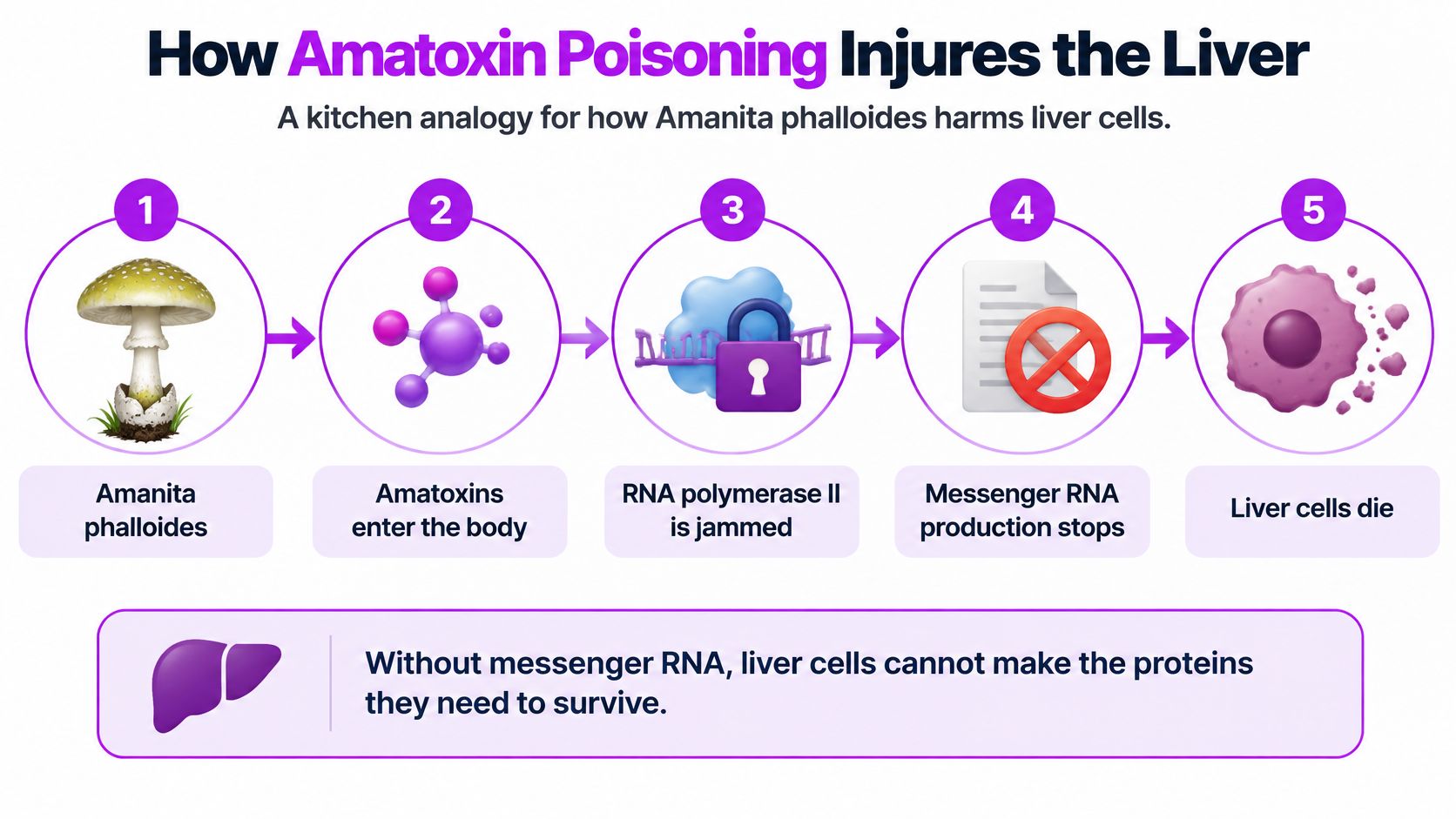
Amanita phalloides, commonly called the death cap, contains toxins that interrupt a basic survival process inside liver cells. Think of a kitchen where staff need written orders before they can prepare anything. Amatoxins jam RNA polymerase II, the machinery that makes messenger RNA, so the cell can't produce the instructions it needs to keep making essential proteins.
The cellular sequence is illustrated below.
Why feeling better can be misleading
The usual clinical concern follows a sequence:
- Digestive illness appears first. Vomiting, diarrhea, and abdominal pain may begin after a delay following the meal.
- Symptoms may temporarily ease. The person may interpret a quieter period as recovery.
- Liver injury becomes apparent. Jaundice, dark urine, clotting problems, unusual bleeding, or confusion can develop.
- Severe poisoning progresses. Patients may develop fulminant liver failure and failure of other organs.
A clinical toxicology review describes amatoxin inhibition of RNA polymerase II and reported AST and ALT values above 5,000 U/L in severe poisoning. These enzymes are markers of injury, not a measure of how effectively a mushroom is cleansing anything.
A 2024 clinical case review documents acute liver injury after wild-mushroom consumption with ALT of 5,582 U/L. The important distinction isn't the exact laboratory value, but that digestive symptoms can precede serious liver damage.
Emergency rule: Vomiting, diarrhea, abdominal pain, jaundice, confusion, or dark urine after a wild or uncertain mushroom requires immediate poison-control or emergency toxicology assessment.
What clinicians need to know
Tell the treating team what was eaten, when it was eaten, how much was consumed, and how it was prepared. Mention possible look-alike mix-ups and whether anyone else shared the dish. Keep available packaging, photographs, or leftovers for identification, but don't delay seeking care to collect them.
Home fluids aren't treatment for amatoxin injury. Neither is buying charcoal later or waiting to arrange an outpatient blood test. Clinicians need to assess the exposure and determine treatment while the person may still look relatively well.
What Liver Protection Claims Really Show
There are plausible reasons to investigate mushroom compounds for liver health. That isn't the same as having a treatment ready for use.
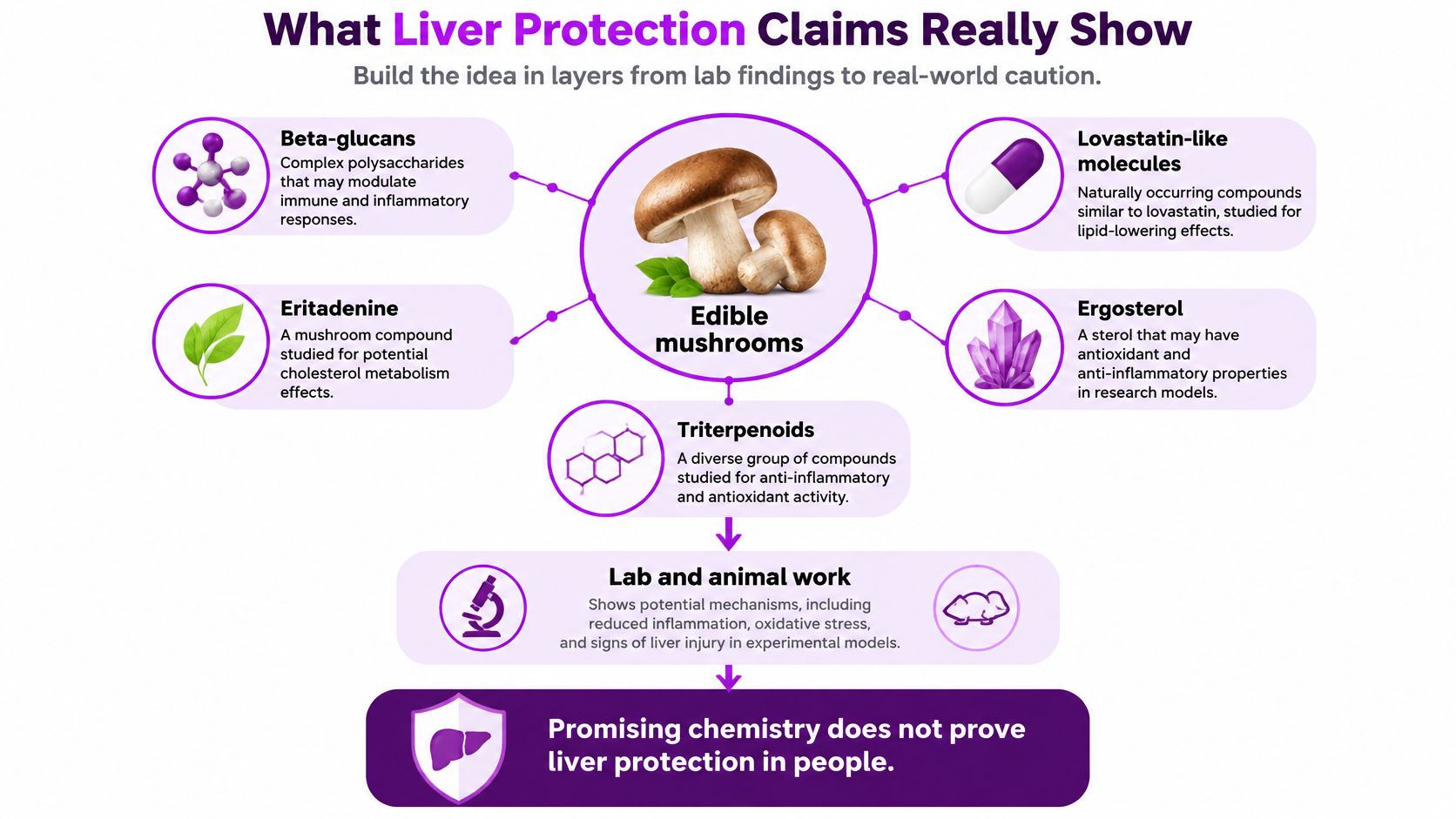
Edible mushrooms contain beta-glucans, eritadenine, lovastatin-like molecules, ergosterol, and triterpenoids. A reference chapter on mushroom hepatoprotection describes laboratory and animal work involving lipid regulation, antioxidant defenses, immune signaling, and inflammation, including extracts from Ganoderma, Pleurotus, Lentinus, and Calocybe that reduced chemically induced enzyme elevations or injury from carbon tetrachloride, alcohol, or paracetamol.
The evidence needs to travel through several stages before it can support a human treatment claim.
A mechanism is a blueprint, not a prescription
Animal experiments can help identify a promising compound or pathway. They don't establish that a commercial capsule reaches the same tissues at a useful concentration, improves a person's liver disease, or remains safe with their medicines.
Even the outcome matters. Lower enzyme values in a chemically injured animal aren't equivalent to preventing cirrhosis, treating hepatitis, or improving long-term health in someone with fatty liver disease.
What the human trials actually measured
A review of medicinal-mushroom clinical studies reported few adverse events, mostly nausea or diarrhea, with one event described as related to liver dysfunction; it also summarized a crossover trial in 18 healthy adults who took Ganoderma lucidum equivalent to approximately 13.2 grams of fresh mushroom daily for four weeks, and a lion's mane trial in 30 adults aged 50 to 80 who took 3 grams daily for 16 weeks.
The Ganoderma trial found no statistically significant change in liver-toxicity markers. It also found no significant improvement in antioxidant status, inflammation, immune status, DNA damage, or cardiovascular-risk measures. In the lion's mane trial, ALT, AST, alkaline phosphatase, and bilirubin remained within normal ranges.
Those findings support a narrower conclusion than liver protection: the studied preparations appeared reasonably well tolerated during the study periods. They don't prove that a different extract, larger dose, or longer course repairs an injured liver.
A product can be tolerated without being an effective treatment.
For another perspective on mushroom-related health claims, the following video provides additional context.
Keep culinary mushrooms on the plate if you enjoy them. Don't substitute concentrated extracts for established care for NAFLD, hepatitis, or cirrhosis.
Poisoning Numbers Behind the Headlines
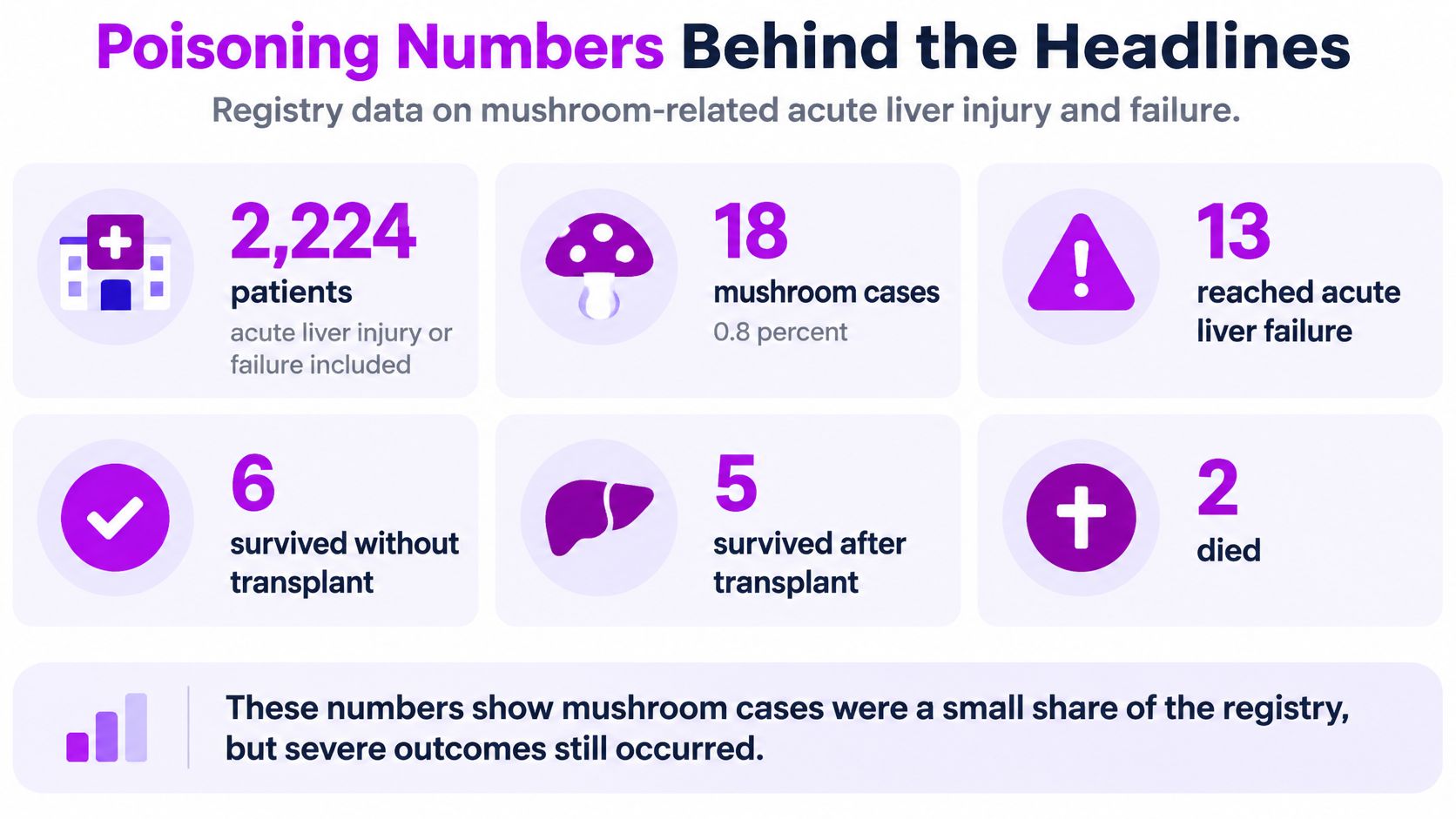
Mushroom poisoning accounts for a small share of acute liver-injury admissions, but the outcomes can be severe. A registry study of acute liver injury and failure included 2,224 patients, of whom 18, or 0.8%, had mushroom-related illness; among the 13 who developed acute liver failure, six survived without transplantation, five survived after transplantation, and two died without transplantation.
In that affected subgroup, approximately half needed a transplant or died. That's a description of patients who reached acute liver failure, not the likelihood of injury after eating an ordinary mushroom meal.
The registry's outcomes are summarized visually below.
Read each number with its patient group
Reported outcomes after hepatotoxic mushroom poisoning
| Report | Who was studied | Liver outcome |
|---|---|---|
| Acute liver injury registry | Patients admitted with acute liver injury or failure, including mushroom-related cases | Some survived without transplantation; others required transplantation or died |
| CDC Northern California report, November 2025 to March 2026 | 39 suspected amatoxin poisonings from foraged mushrooms | 32 recovered (82%), three required transplants (8%), and four died (10%) |
| 2025 poisoning series | 112 patients | 28 (25%) developed acute liver failure; all 12 inpatient deaths resulted from liver-failure complications |
| 2025 hepatotoxic poisoning study | 255 patients; overall mortality 5.1%; 33 received silymarin | After adjustment, silymarin wasn't associated with lower mortality, less acute liver failure, or a shorter hospital stay; the only significant adjusted benefit was less acute kidney injury, with a risk difference of minus 13.9% |
| Lepiota series, 2024 | 18 patients | ALT ranged from 44 to 9,140 IU/L; three underwent transplantation, and two of those patients died |
| Emergency transplant series, 2024 | 26 patients receiving emergency liver transplantation | Mortality was 16.7% among males and 42.8% among females |
These reports involve different populations and levels of severity. Don't combine their percentages into a single personal risk estimate, and don't interpret a small transplant series as a reliable sex-based prediction for an individual patient.
The danger isn't confined to these hospital groups or one region. A 2024 clinical review cites an estimated 50 to 100 amatoxin-poisoning cases annually in Western Europe.
Why a supplement isn't an antidote
Silymarin is sometimes discussed as though having it at home solves mushroom poisoning. The adjusted findings above don't support that conclusion. An observed difference between treatment groups can reflect differences in who received treatment, how ill they were, or other care they received.
Hospital toxicology care also isn't equivalent to taking a retail supplement. The practical response to suspected poisoning is urgent medical assessment, not searching the pantry for a liver-support product.
Reishi and Lion's Mane Side by Side
Reishi and lion's mane often share shelf space, but their published liver-safety records aren't identical. Traditional use and a familiar brand name don't settle the question for either product.
Reishi, or Ganoderma lucidum, has rare reports of serious injury despite generally quiet short-term trials. Lion's mane, or Hericium erinaceus, has a more reassuring published record, but that doesn't make it a liver treatment or guarantee that every capsule is harmless.
What the safety records support
Medicinal mushroom products and liver safety signals
| Product | Human liver data | Injury pattern | When to stop and seek care |
|---|---|---|---|
| Reishi extract | Small, short trials usually show no ALT or AST change | Rare acute hepatocellular injury, from mild enzyme elevations to hepatitis or acute liver failure; chronic injury hasn't been described | Fatigue, nausea, dark urine, pale stools, itching, or jaundice |
| Lion's mane | Small trials kept enzymes and bilirubin within normal ranges; no LiverTox case-series signal | No established clinically apparent injury in small trials | New symptoms or abnormal liver tests |
| Multi-ingredient mushroom blend | Evidence for an individual species doesn't establish safety of the whole mixture | Another herb, adulterant, or contaminant may be responsible | Stop the whole product and bring its label to a clinician |
The LiverTox monograph on reishi describes rare acute hepatocellular injury ranging from mild enzyme elevations to hepatitis and acute liver failure, while noting that chronic injury hasn't been described. This is why an uneventful short trial can't establish universal safety.
The LiverTox monograph on lion's mane reports no clinically apparent liver injury attributed to it in small trials and no appearance in large case series or systematic reviews of supplement-induced liver injury. That absence is reassuring, but limited study size and multi-ingredient products leave uncertainty.
Inspect the bottle, not just the mushroom name
Before buying, check the scientific species name, preparation, extract ratio if applicable, and dose per serving. Look for third-party contaminant testing and read the complete ingredient list, including added herbs. Keep the batch number so the exact product can be traced if a problem develops.
A mushroom complex with unclear amounts is harder to assess than an identified single-species product. Avoid starting several new supplements together, because you'll make it harder to connect a symptom to an exposure.
Our guide to lion's mane fungus offers broader species context, but your own symptoms and medical results still determine whether continued use is sensible.
If warning symptoms appear, stop the supplement and get assessed, particularly if you're also taking medicines. Abnormal liver tests are a reason for medical review, not a reason to increase a supposed liver-support dose.
Drugs Alcohol and Misleading Liver Tests
A new mushroom product followed by an abnormal blood test deserves attention, but the timing alone doesn't prove the cause. A clinician needs the full exposure history, including products you don't think of as medicine.
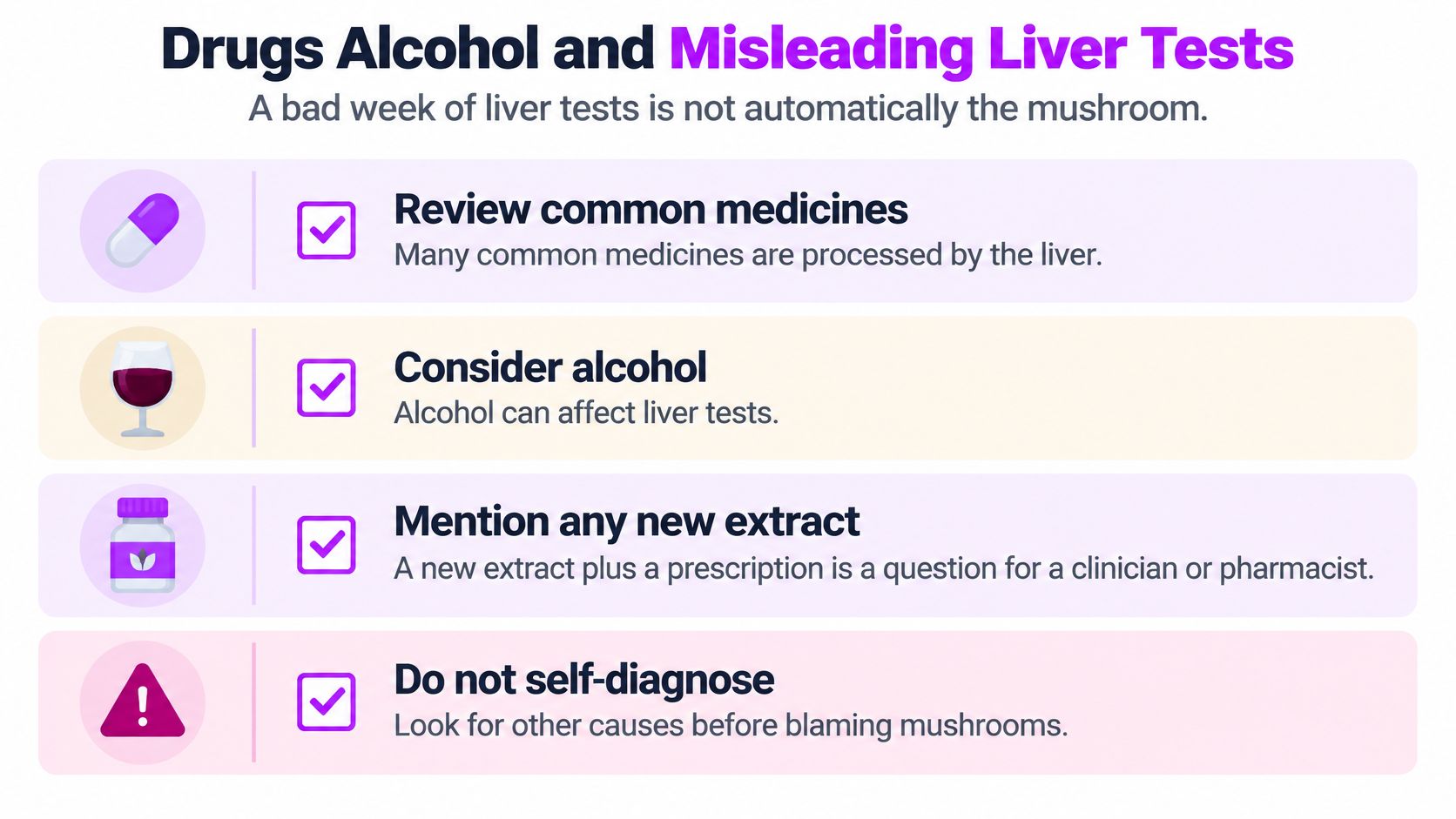
Alcohol, paracetamol or other pain medicines, prescription drugs, additional herbal products, fasting, dehydration, and adulterated products can complicate the picture. Many common medicines are processed by the liver, so a new extract alongside a prescription is a question for a clinician or pharmacist, not an experiment to manage alone.
Use this checklist to prepare for that discussion.
Controlled psilocybin findings have limits
A review of mushroom-related safety and metabolic evidence reports no clear evidence of direct liver injury from psilocybin under controlled conditions, while highlighting uncertainty around misuse and combinations with alcohol, pain medicines, or other potentially liver-toxic substances. It also describes variable bioactive concentrations in commercial products and a registered study examining Ganoderma lucidum powder in metabolic-associated fatty liver disease.
A registered study means investigators are asking a question, not that the treatment already works. Likewise, supervised exposure to a known preparation doesn't establish the safety of an unidentified product used with other substances.
A normal enzyme panel in a short trial indicates tolerability under those conditions, not liver repair.
Medication safety also extends beyond the liver. If antidepressants are involved, use our guide to mushrooms and antidepressants to prepare questions for your prescriber, not to make unsupervised prescription changes.
A useful monitoring routine
- Make a complete baseline list. Include prescriptions, nonprescription medicines, supplements, mushroom products, and alcohol amounts.
- Avoid simultaneous changes. A dated change is easier to assess than several new products started together.
- Recognize warning signs. Jaundice, dark urine, pale stools, severe vomiting, confusion, unusual bleeding, or a clinician-flagged abnormal result requires medical attention.
- Skip monitoring after uncertain wild ingestion. Contact poison control or emergency care rather than waiting to see a pattern.
- Bring evidence to the visit. Labels, batch details, amounts, and a symptom timeline help clinicians assess possible causes.
Clinicians commonly assess ALT, AST, alkaline phosphatase, and bilirubin, with a clotting check when mushroom-related liver injury is suspected. Don't wait for these results before seeking emergency help after a potentially poisonous exposure.
Decide Whether to Continue or Stop
The decision should follow the exposure and your condition, not the promise on the package. Known identity matters, but it isn't the only requirement for safe use.
An unidentified or potentially poisonous wild mushroom means immediate poison-control or emergency guidance. Vomiting or diarrhea after that exposure isn't something to manage by keeping a more detailed journal. Jaundice, confusion, unusual bleeding, or dark urine makes prompt assessment especially important.
Match the decision to your situation
- Reliable culinary food: Keep it as food if you tolerate it, and drop any plan to use it instead of treatment for liver disease.
- Reishi, lion's mane, or a blend: Don't continue blindly through new symptoms. Stop the supplement and seek medical review when warning signs or abnormal tests appear.
- A psilocybin practice: A known source and absence of liver symptoms don't establish overall safety. Discuss medicines and underlying liver disease with a clinician, and don't casually combine it with alcohol or pain medicines.
For someone already microdosing, a written log can make the history easier to reconstruct. Record product identity, batch, dose, time taken, symptoms, and other exposures rather than relying on memory at a medical appointment.
Use tracking for communication, not diagnosis
MicroTrack can serve as a private log for people already tracking a practice. Our journal entries can include mood, dosage, sensations, and side effects. Those observations can support a conversation with a clinician, but they can't diagnose liver injury or replace blood tests or poison control.
If enzymes rise, bring your timeline and product labels to the appointment. Don't use a good mood score, a symptom-free day, or an apparent pattern as clearance to restart a suspected product.
Name the mushroom, watch for liver warning signs, and let medical professionals handle poisoning and abnormal tests.
MicroTrack offers a private journal for recording dosage, mood, sensations, and side effects so you can keep a clearer account of an existing microdosing practice. Visit MicroTrack to organize your observations, and bring relevant records to your clinician if symptoms or liver-test concerns arise.